Why Layout Is the Foundation of a Great Kitchen
When people begin thinking about a new kitchen, the first instinct is often to focus on door colours, worktop materials, and appliances. All of those decisions matter, but none of them will save a kitchen that has been let down by a poor layout. The layout is the foundation on which everything else is built, and getting it right from the very start makes the difference between a kitchen that works beautifully every single day and one that frustrates you every time you use it.
At PB Kitchens and Bathrooms, layout is always the first conversation we have with clients at our Seaton design studio. Before we talk about style or finish, we want to understand how you use your kitchen, how many people cook at once, whether you entertain regularly, and how the room connects to the rest of your home. Those answers shape everything that follows.
This guide walks through the most common kitchen layouts, the pros and cons of each, and how to decide which one is right for your space and your lifestyle.
The Galley Kitchen
The galley kitchen places units and worktops along two parallel walls, creating a corridor-style workspace in between. It is one of the most efficient layouts for cooking, because everything is within easy reach and the workflow between the sink, hob, and oven is naturally compact and logical.
Galley kitchens work brilliantly in longer, narrower rooms, and they are particularly popular in period properties where the kitchen is a separate, dedicated room rather than part of an open-plan living space. With the right design, a galley kitchen can feel incredibly streamlined and professional.
The main challenge is that galley kitchens can feel tight if the corridor between the two runs of units is too narrow. As a general guide, you want at least 1.2 metres between facing units to allow two people to work comfortably without getting in each other’s way. Our designers will advise on the optimal dimensions for your specific room during your home measure visit. You can see examples of how we approach layouts in our kitchen gallery.
The L-Shaped Kitchen
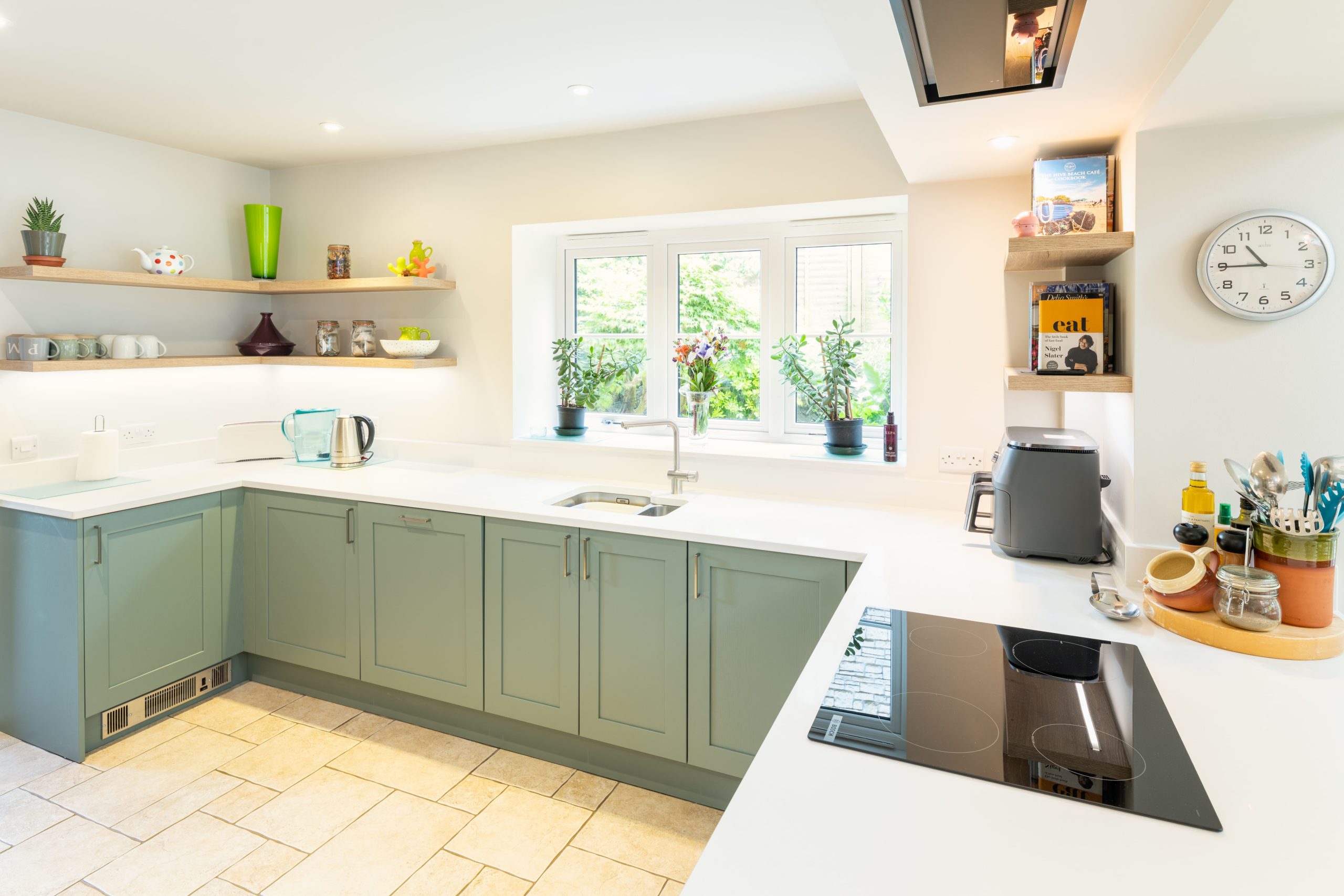
The L-shaped layout uses two runs of units that meet at a corner, typically leaving the rest of the room open. It is one of the most versatile layouts available, working well in rooms of many different shapes and sizes, and it adapts naturally to open-plan living because it keeps the cooking zone defined without closing it off from the rest of the space.
One of the great advantages of the L-shaped layout is the natural work triangle it creates between the sink, hob, and fridge, making cooking intuitive and efficient. The corner junction can sometimes feel like wasted space, but clever internal fittings such as carousel units, pull-out corner drawers, and Le Mans systems can make the most of every inch.
If you are considering adding a kitchen island, an L-shaped layout often provides the best foundation for one, because the open floor space on the remaining two sides of the room gives you room to position an island comfortably. Visit our Seaton showroom to see how islands and L-shaped layouts can work together.
The U-Shaped Kitchen
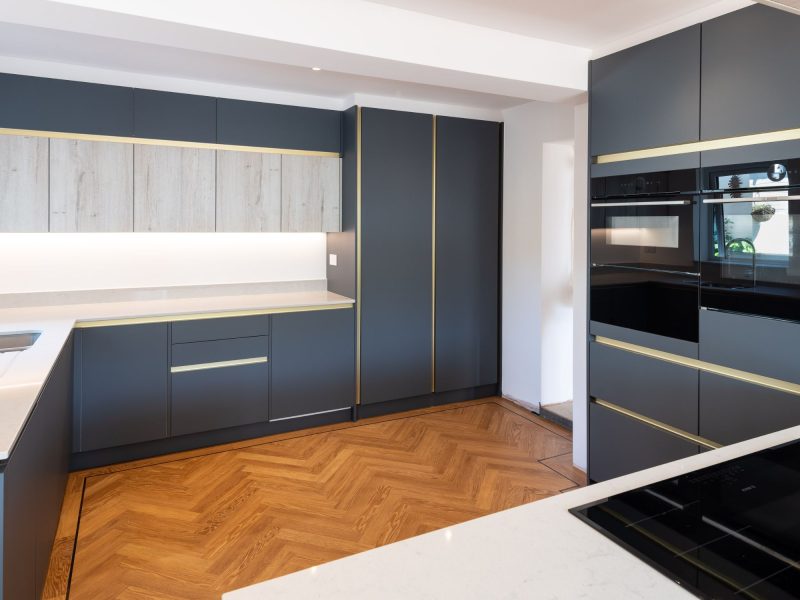
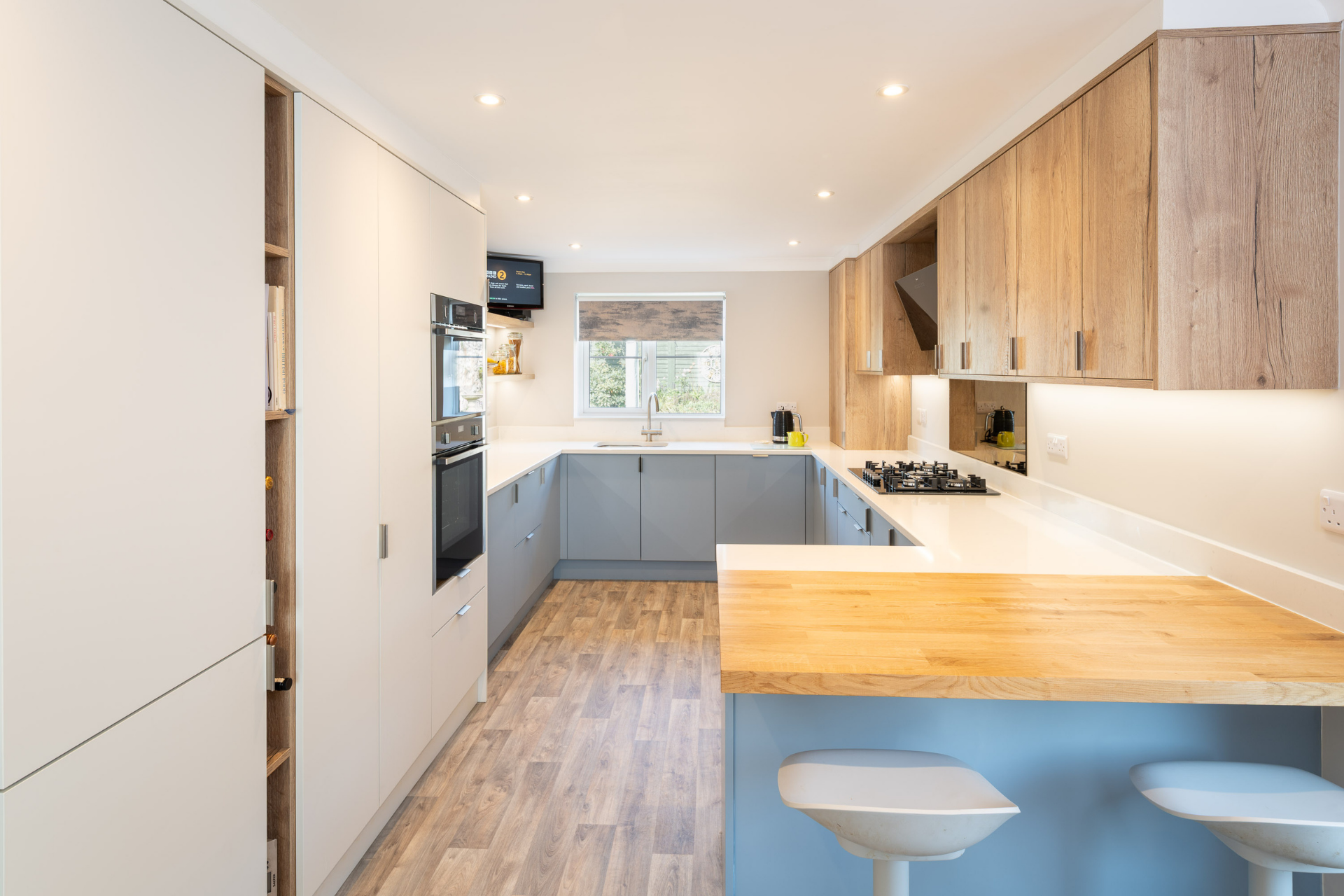
The U-shaped kitchen wraps units around three walls, providing an exceptional amount of worktop space and storage. It is the layout of choice for keen cooks who want dedicated zones for preparation, cooking, and washing up, all within easy reach of one another.
U-shaped kitchens work best in larger rooms, because the three runs of units require enough floor space to move freely between them. In a smaller room, a U-shaped layout can feel overwhelming, but in the right space it is one of the most functional and satisfying layouts you can choose.
One thing to be mindful of is the positioning of the doorways. A U-shaped kitchen with a door at one end of the U can interrupt the flow of the layout, so careful planning of where units begin and end is important. This is exactly the kind of detail our designers focus on during your initial consultation.
The Open-Plan Kitchen
Open-plan kitchens, where the kitchen flows directly into a dining or living area, have become the dominant choice for family homes over the past two decades. The appeal is obvious: the cook is no longer isolated from the rest of the family or from guests, the space feels larger and more sociable, and the kitchen becomes the genuine heart of the home.
Designing an open-plan kitchen well requires careful thought about zoning. Without walls to define the cooking area, you need to use the layout, the choice of materials, and sometimes the positioning of an island or breakfast bar to create a sense of structure and separation. Lighting also plays a crucial role, with different zones benefiting from different lighting treatments.
Extraction is a particularly important consideration in open-plan kitchens. Without walls to contain cooking smells and steam, you need a powerful and well-positioned extractor fan. Our team will advise on the best extraction solutions for your layout as part of our end-to-end design service. You can learn more about the appliances we specify on our kitchen appliances page.
The Island Kitchen
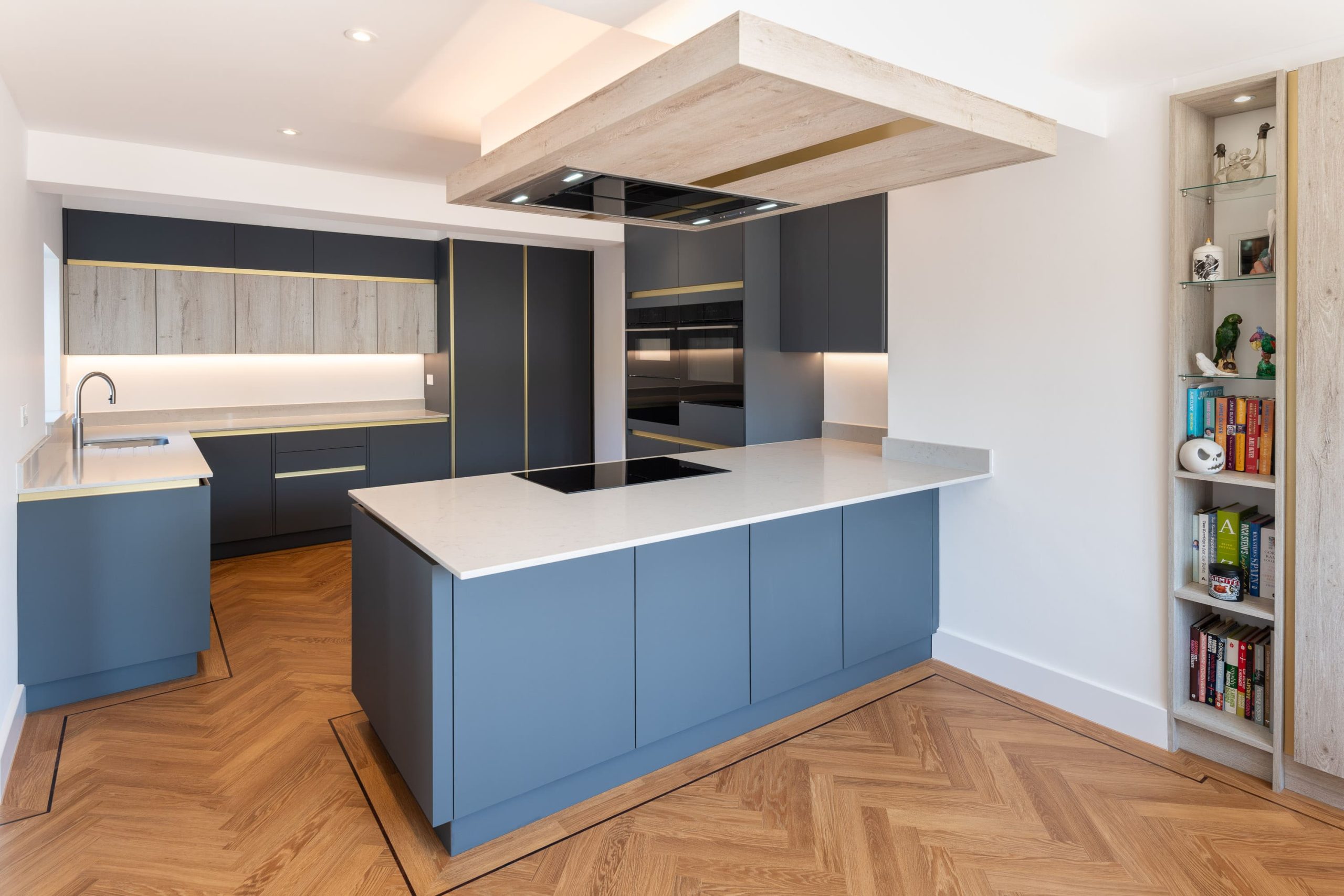
A kitchen island is not a layout in itself, but it transforms whichever layout it is added to. Islands provide additional worktop space, extra storage, a casual dining or seating area, and a natural focal point for the room. In the right space, an island makes an already-good kitchen genuinely exceptional.
The key requirements for an island are space and proportionality. You need a minimum of around 900mm to 1 metre of clear floor space on all sides of the island to move around it comfortably and to open appliance doors without obstruction. The island itself should be proportionate to the room, neither so small that it looks awkward nor so large that it dominates the space.
Islands can house additional appliances such as a hob, a wine fridge, or a second sink. They can also incorporate seating on one side, making them a brilliant solution for households that want a casual eating area without the footprint of a full dining table. Our team can help you work out whether an island is right for your kitchen during your free design consultation.
Getting the Right Advice
Choosing the right kitchen layout is not something you should have to figure out alone. At PB Kitchens and Bathrooms, our designers bring decades of combined experience to every project, and they understand how to make the most of whatever space you have to work with.
The best first step is to visit our Seaton design studio, where you can explore real kitchens in a variety of layouts and begin to get a feel for what might work in your home. From there, we will arrange a home visit to take measurements and assess your space in detail, before presenting you with a full 3D design and an itemised quote. Find out more about how the process works on our Your Journey page.
We serve homeowners across Devon and into Dorset, from Sidmouth and Honiton through to Exeter and Lyme Regis. If you are ready to start planning your new kitchen, we would love to hear from you. Call us on 01297 692250 or book a showroom visit today.
Frequently Asked Questions
Which kitchen layout is best for a small room?
A galley layout or a well-planned L-shape tends to work best in smaller rooms, as both make efficient use of limited floor space while keeping the workflow compact. Our designers can advise on the best approach for your specific dimensions.
Can I add an island to any kitchen layout?
Not always. An island requires a minimum of around 900mm to 1 metre of clear floor space on all sides to function safely and comfortably. Your room needs to be large enough to accommodate both the island and the surrounding circulation space without feeling cramped.
What is the kitchen work triangle?
The kitchen work triangle refers to the relationship between the three most-used points in any kitchen: the sink, the hob, and the fridge. A well-designed layout keeps these three points within easy reach of one another, minimising unnecessary movement during cooking.
How do I know which layout is right for my home?
The best way to determine the right layout is to speak with an experienced kitchen designer who can assess your room dimensions, your lifestyle, and the way the kitchen connects to the rest of your home. We offer a free, no-obligation design consultation at our Seaton showroom.
Does PB Kitchens and Bathrooms design open-plan kitchens?
Yes, absolutely. Open-plan kitchens are one of our specialities, and we have a great deal of experience in designing spaces that balance the sociable, connected feel of open-plan living with the practical needs of a fully functional kitchen. Visit our kitchen gallery to see examples of our work.