A kitchen in a coastal home in Devon or Dorset has to cope with things an inland kitchen rarely faces: salty air, higher humidity, sand and wet boots coming through the back door, and, in many older cottages, walls that haven’t been straight for a century or more. The good news is that a well designed kitchen handles all of this easily. It just needs to be planned with the setting in mind.
From Seaton, Beer and Sidmouth to Lyme Regis and further into Dorset, our team has spent over 30 years designing and fitting kitchens along this stretch of coast. Here’s what we’ve learnt about making a kitchen that looks beautiful and stays that way.
Why Coastal Kitchens Need a Different Approach
Sea air carries salt, and salt is hard on metal. Over time it can dull lower-grade finishes, pit some types of steel and leave hinges and runners feeling stiff. Coastal homes also tend to be more humid, particularly older stone and cob properties, which can affect how materials behave.
None of this means you have to avoid any particular style. It simply means paying a little more attention to the parts you can’t see as well as the ones you can.
Choose Hardware That Will Last
This is the single most overlooked detail in coastal kitchens. Hinges, drawer runners and handles do more work than any other part of the kitchen, opening and closing thousands of times a year.
- Hinges and runners: quality soft-close mechanisms from reputable manufacturers are built to resist corrosion and keep running smoothly. Lower-grade fittings are where problems tend to show first.
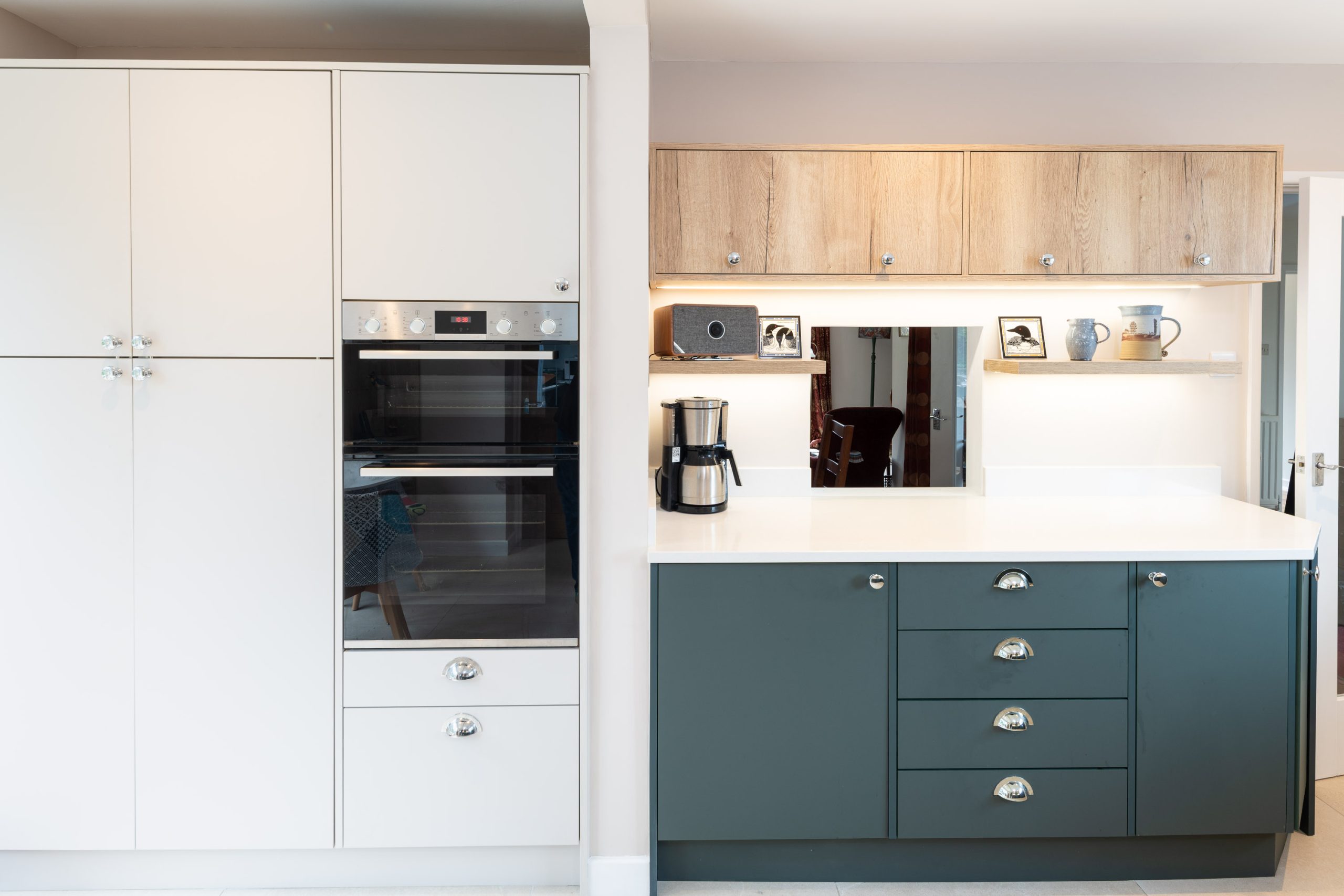
- Handles: solid brass, good quality stainless steel and well finished knurled or lacquered handles all cope well. Thin plated finishes can wear through more quickly near the sea.
- Taps and sinks: a good quality tap and sink are worth the investment anywhere, but especially in a coastal home where water and salt air work together.
A handleless kitchen is another option worth considering, as there are fewer exposed metal fittings to look after.
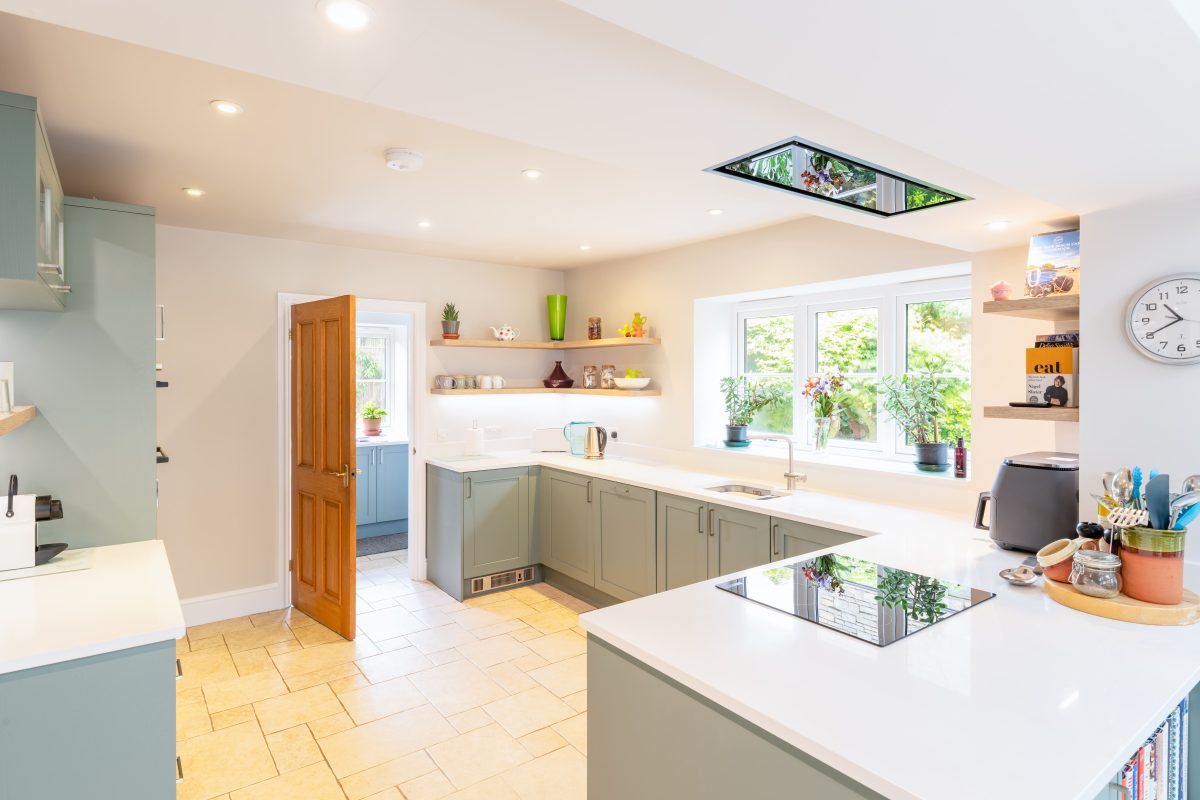
Pick Worktops and Doors That Handle Moisture
Humidity and frequent cleaning are the main things to plan for. Our guide to kitchen cabinet and worktop materials covers the options in depth, but for coastal homes a few points stand out.
Worktops
Quartz is a popular choice because it’s non-porous, hard wearing and needs very little maintenance. Granite is also durable, though it benefits from occasional sealing. Solid wood worktops look wonderful in a cottage kitchen, but they need oiling regularly and careful attention around the sink, so they suit owners who are happy to look after them.
Doors and cabinets
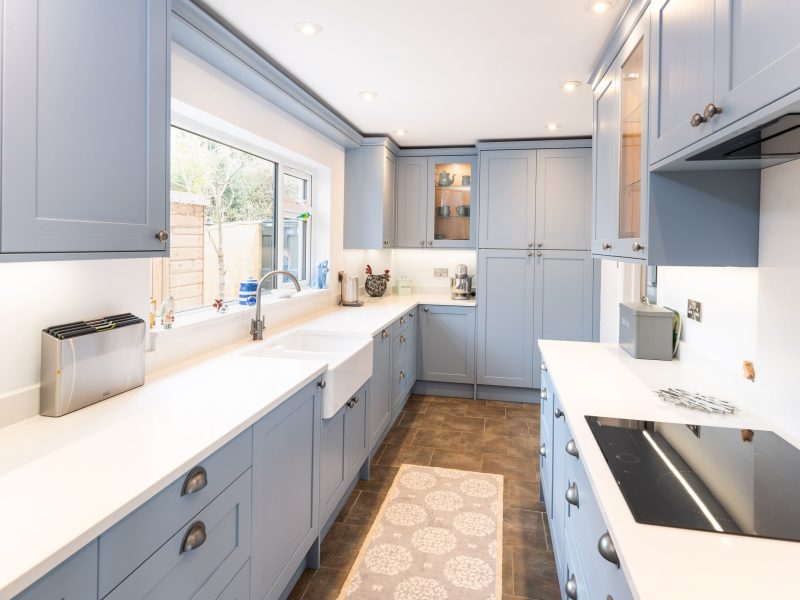
Painted doors are a favourite along the coast, and a quality factory finish is far more resilient than a hand-painted one. The carcass matters too. A well made cabinet with properly sealed edges is much better at resisting moisture than a lower-cost carcass with exposed board edges, which can swell if water gets in.
Ventilation Matters More Than You Think
In a coastal property, steam from cooking adds to moisture that’s already in the air. Without good extraction, that moisture settles on walls, cabinets and window frames.
Wherever possible, we recommend an extractor that’s ducted to the outside rather than one that recirculates air through a filter. Ducted extraction removes moisture as well as cooking smells. Our partners at Devon Appliances can advise on the right model for your space, and you can find out more about our kitchen appliances or read our guide to choosing appliances for your new kitchen.
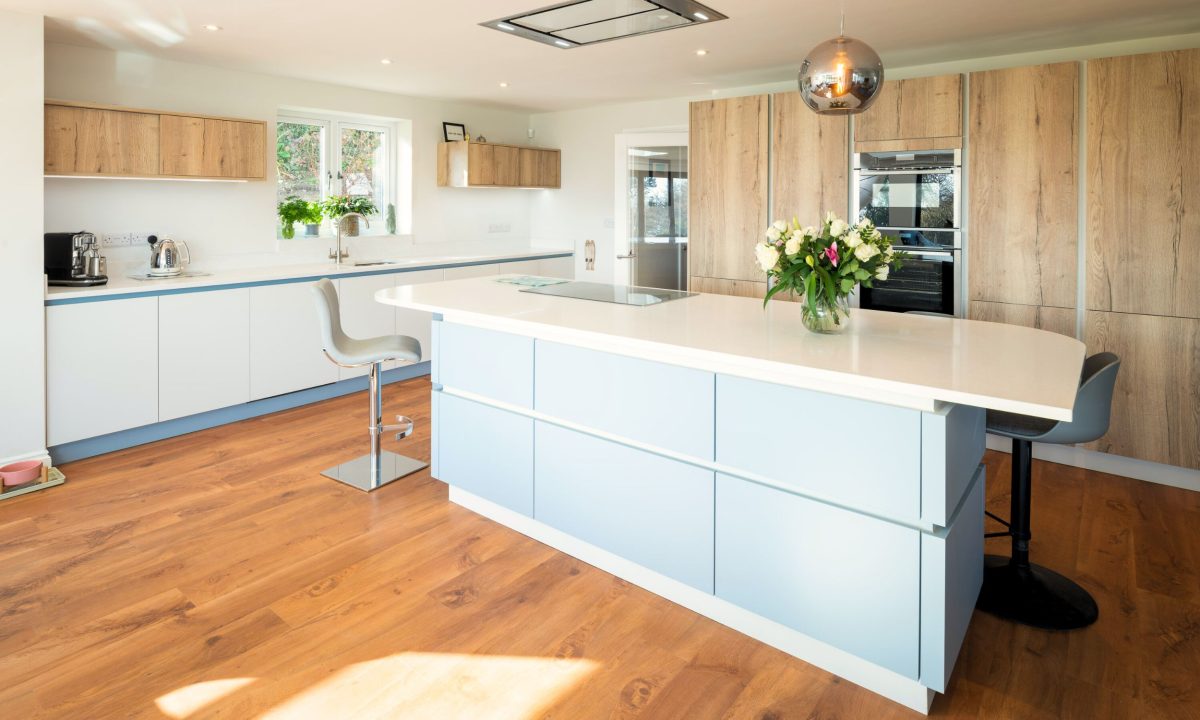
Working With Older Cottages
Many coastal homes in East Devon and West Dorset are old: stone fishermen’s cottages, cob farmhouses and Victorian seaside villas. They’re full of character, and they’re rarely square.
Uneven walls and floors are where an off-the-shelf kitchen struggles. Cabinets end up with visible gaps, or fillers that look like an afterthought. A bespoke or semi-bespoke kitchen can be scribed to follow the line of the wall, so it looks as though it has always been there.
This is where having designers who understand installation really pays off. Our head designer Damian has a cabinet-making background, so the design accounts for sloping ceilings, deep window reveals and low beams from the very start. Our guide to bringing character to a modern kitchen has ideas if you’d like to blend old and new.
Plan for Sand, Boots and Wet Dogs
Coastal living is lovely, but it’s not tidy. Beach trips, muddy walks along the coast path and wet dogs all tend to come in through the kitchen.
A few design choices make a real difference:
- Hard wearing flooring near the back door, ideally a durable tile or quality luxury vinyl that copes with sand and water.
- A boot room or utility area, even a small one, with somewhere for coats, wellies and towels.
- A tall cabinet near the door for beach bags, dog leads and the things that otherwise end up on the worktop.

Make the Most of the Light and the View
If your kitchen looks towards the sea or the hills, think about what you’ll see from where you spend most of your time. Many people put the sink under the window by default. In some homes that’s perfect. In others, the view is better from an island or a dining table, and the sink is better placed elsewhere.
Coastal light is bright and changes through the day, so colours can look very different from the samples you see in a showroom. Light, natural tones like soft whites, sage, sand and muted blues tend to sit well with the setting, but it’s always worth seeing a door sample in your own room before deciding. Our tips on creating the perfect kitchen colour scheme may help.
Second Homes and Holiday Lets
Plenty of homes along the coast are second homes or holiday lets, and these need a slightly different brief. A kitchen used by different guests every week needs to be robust, easy to clean and intuitive for someone who has never used it before.
That usually means durable worktops, clear and simple storage, good quality integrated appliances and finishes that won’t show every fingerprint. It’s also worth thinking about how the kitchen will be looked after while you’re away, which is one reason many owners value having a local team they can call on for aftercare.
Summary
A coastal kitchen in Devon or Dorset needs to stand up to salt air, humidity and busy outdoor lives. Choose quality hardware, moisture-resistant worktops and well sealed cabinets, plan proper ducted extraction, and make sure the design accounts for the character and quirks of an older home. Get those details right and your kitchen will look as good in fifteen years as it does on the day it’s finished.
To see how we’ve approached kitchens in homes like yours, browse our recent projects or request a copy of our portfolio. When you’re ready, visit our Seaton design studio and we’ll help you plan a kitchen crafted around your life.

Frequently Asked Questions
Does sea air damage kitchens?
Salt air can dull lower-grade metal finishes and affect hinges and runners over time. Choosing quality hardware, well sealed cabinets and durable worktops helps a coastal kitchen stay looking its best.
What is the best worktop for a coastal kitchen?
Quartz is a popular choice because it is non-porous and needs very little maintenance. Granite is also durable, while solid wood suits owners who are happy to oil and care for it regularly.
Do I need a ducted extractor in a coastal home?
We recommend ducted extraction wherever possible. It removes moisture from cooking as well as smells, which matters in coastal homes where the air is already more humid.
Can you fit a kitchen in an old cottage with uneven walls?
Yes. A bespoke or semi-bespoke kitchen can be scribed to follow uneven walls and floors, so it looks as though it has always been part of the house.
Do you design kitchens in Dorset?
Yes. We design and install kitchens across East Devon and into Dorset, including Lyme Regis and the surrounding area, from our design studio in Seaton.