Why Colour Matters in the Bedroom
The bedroom is the most personal room in a home, and colour plays a bigger role in how it feels than almost any other design decision. The right colour scheme creates a sense of calm, warmth, and coherence that makes the room feel like a genuine retreat. The wrong one can leave a space feeling cold, chaotic, or simply uncomfortable to spend time in.
Unlike the kitchen or bathroom, where durability and practicality are major considerations, the bedroom is a space where mood and atmosphere take precedence. This makes it both an opportunity and a challenge. There is more room for personal expression, but also more room for choices that do not quite land.
At PB Kitchens and Bathrooms, our fitted bedroom designs are crafted to complement the colour palette of the room, not fight against it. Whether you are starting from a completely blank canvas or looking to introduce fitted furniture into an existing scheme, this guide will help you choose colours that will feel right for years to come.
Neutral Foundations: The Safe Bet That Is Never Boring
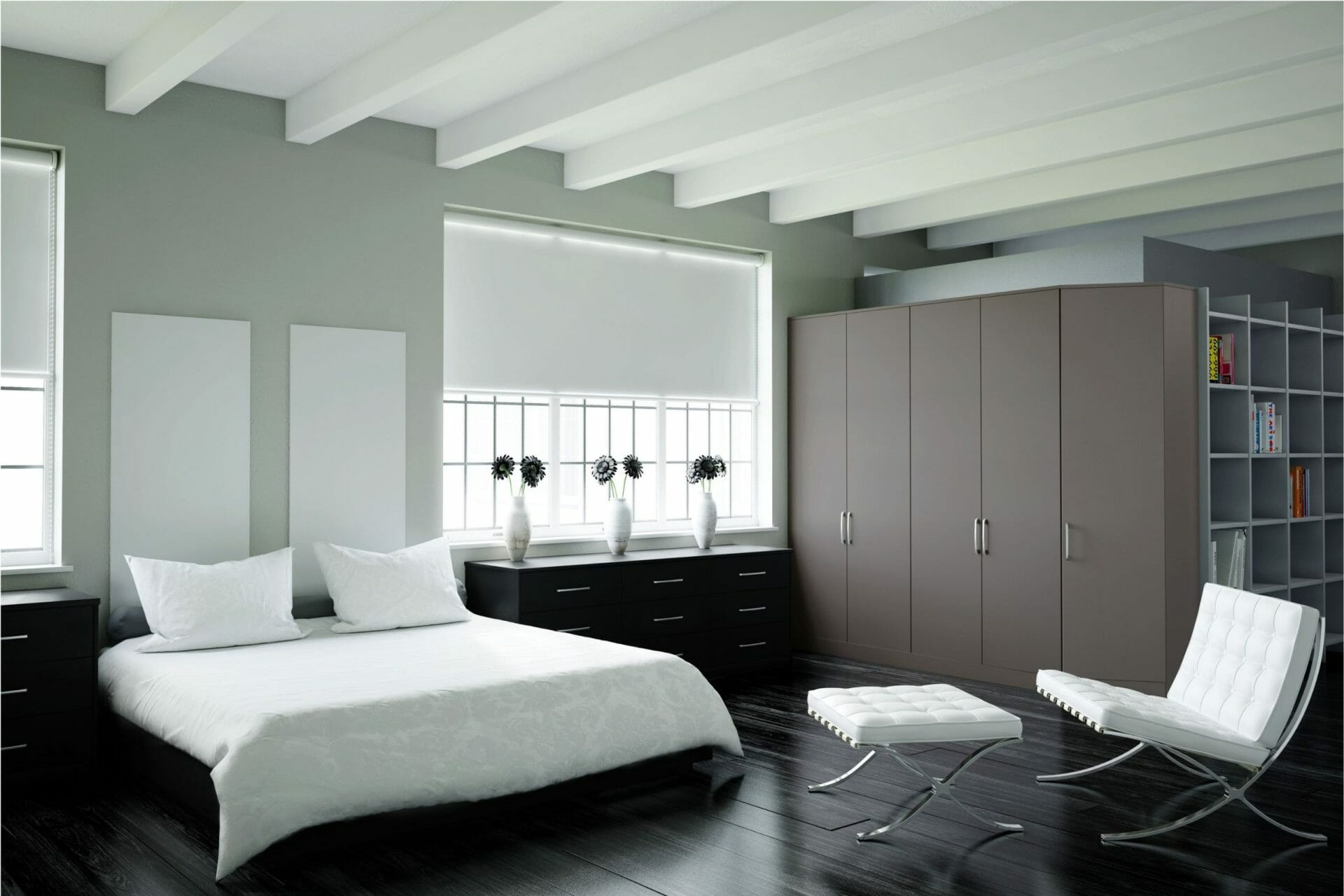
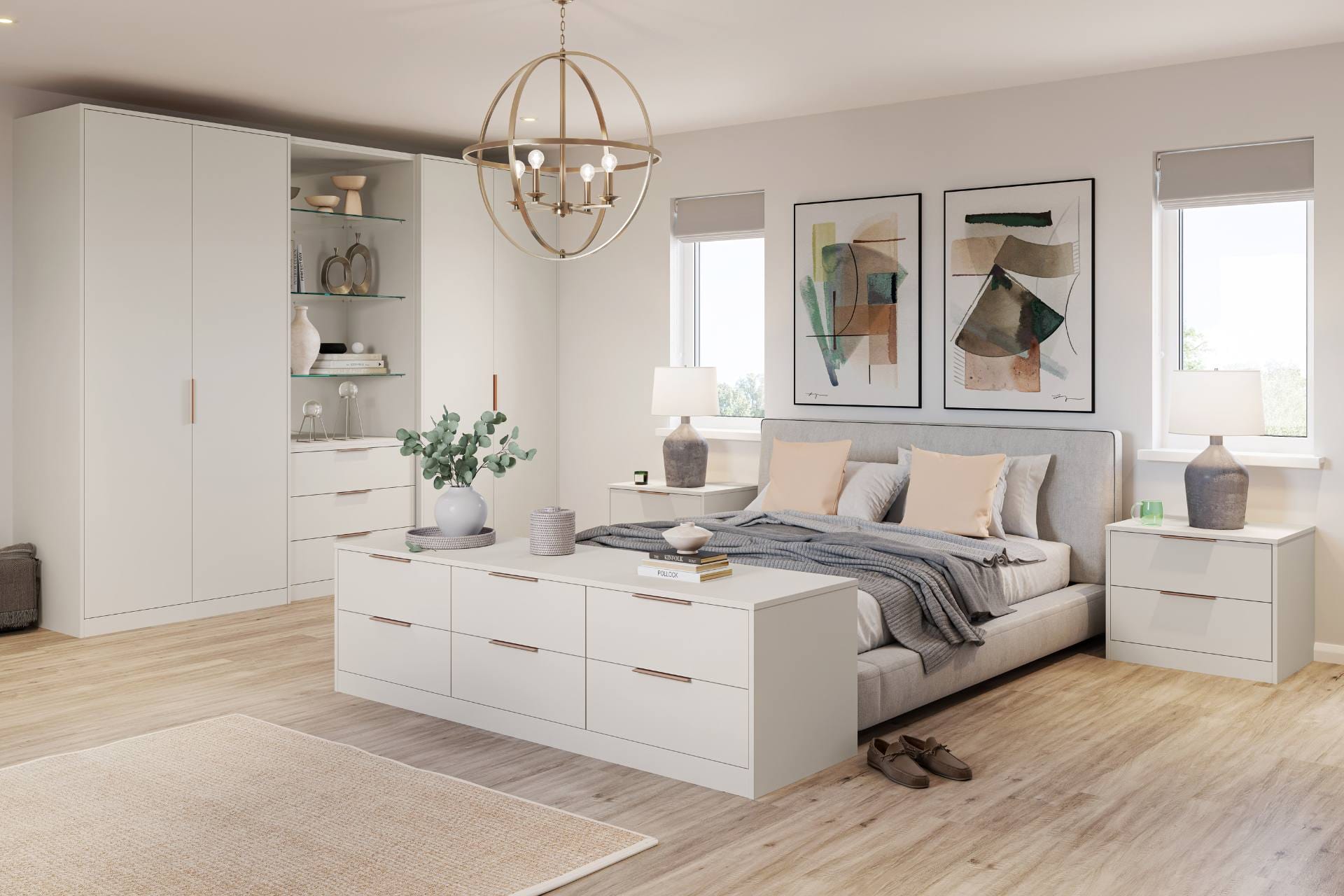
Neutral colour schemes dominate bedroom design for good reason. Soft whites, warm greys, natural linens, and stone tones create a backdrop that is inherently restful, works with a wide range of furniture finishes, and never feels visually demanding. For a room you want to feel calm in at the end of the day, this is a strong foundation.
The key to making a neutral scheme feel considered rather than bland is texture and layering. A room in soft white or warm ivory needs richness to come from the textiles, the flooring, the furniture finishes, and the smaller details. Warm oak cabinetry, linen bedding, woven rugs, and natural fibre cushions give a neutral room depth and warmth without introducing visual noise.
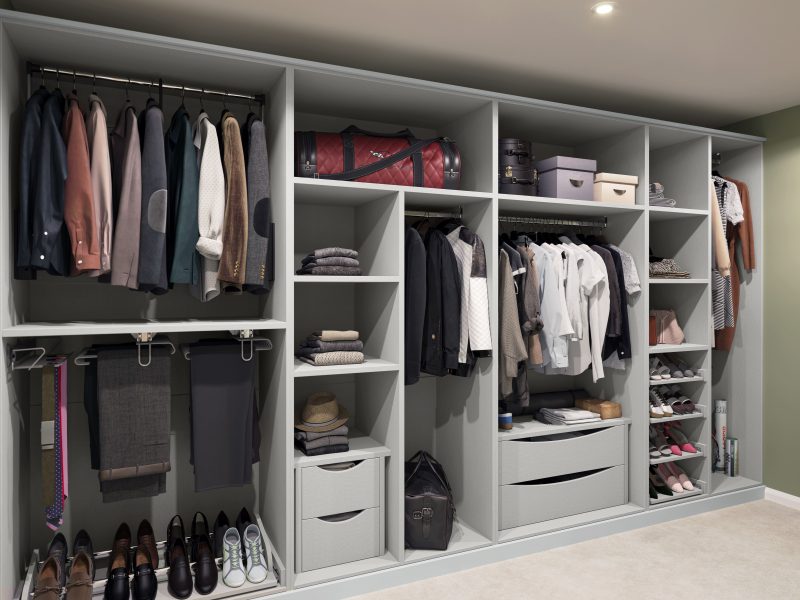
For fitted bedroom cabinetry, painted neutrals in soft, chalky tones are perennially popular. Colours like warm white, light stone, pale linen, and dove grey suit both modern and more traditional interiors, and they have the advantage of looking equally good in both natural and artificial light. Visit our bedroom gallery to see how we have used painted neutrals in real Devon homes.
Warm Tones: Creating Cosiness and Character
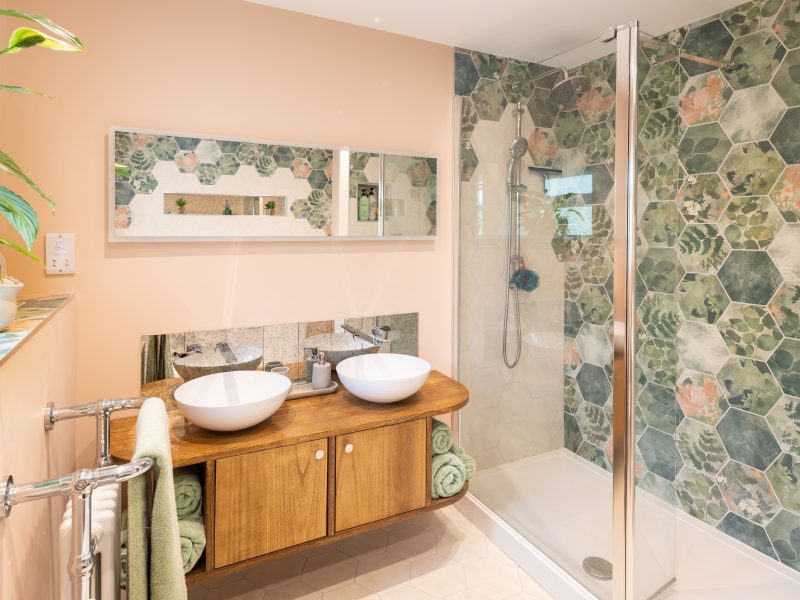
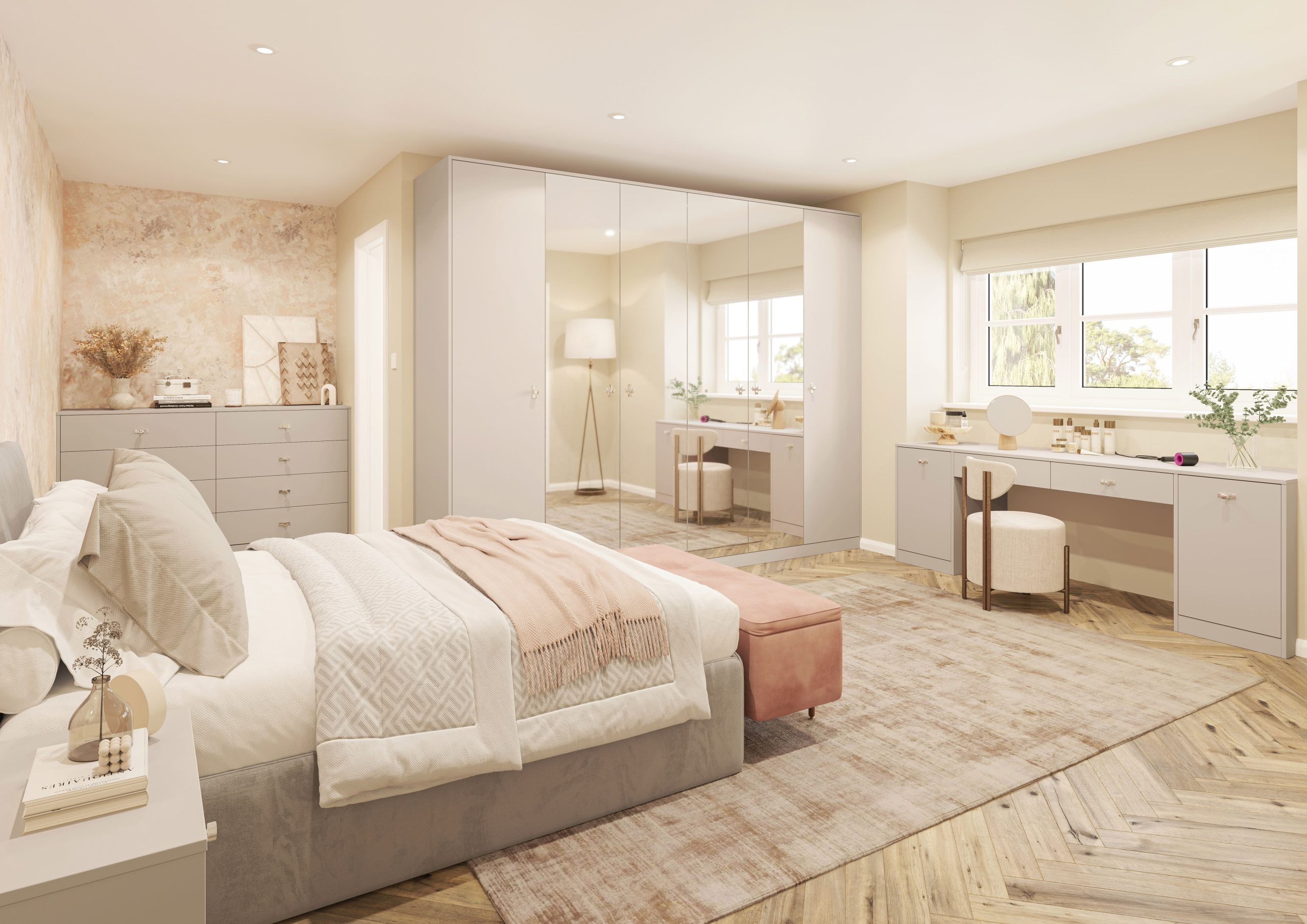
If you want your bedroom to feel warm and enveloping rather than crisp and cool, moving towards the warmer end of the palette is the answer. Soft terracottas, dusty pinks, warm taupes, and earthy ochres have all grown significantly in popularity in recent years, and it is easy to see why. They create a sense of intimacy and comfort that cooler tones sometimes lack.
Warm tones work particularly well in bedrooms that receive less natural light, where cooler colours can feel chilly or flat. A soft, peachy terracotta on the walls with warm-toned wooden furniture and earthy textiles can transform a north-facing room into somewhere genuinely cosy and inviting.
For fitted cabinetry, warm-toned painted finishes in dusty rose, soft terracotta, or warm putty can be surprisingly versatile, especially when paired with brushed brass or antique brass handles. The combination feels luxurious without being excessive, and it ages beautifully.
Deeper Colours: Bold Choices Done Right
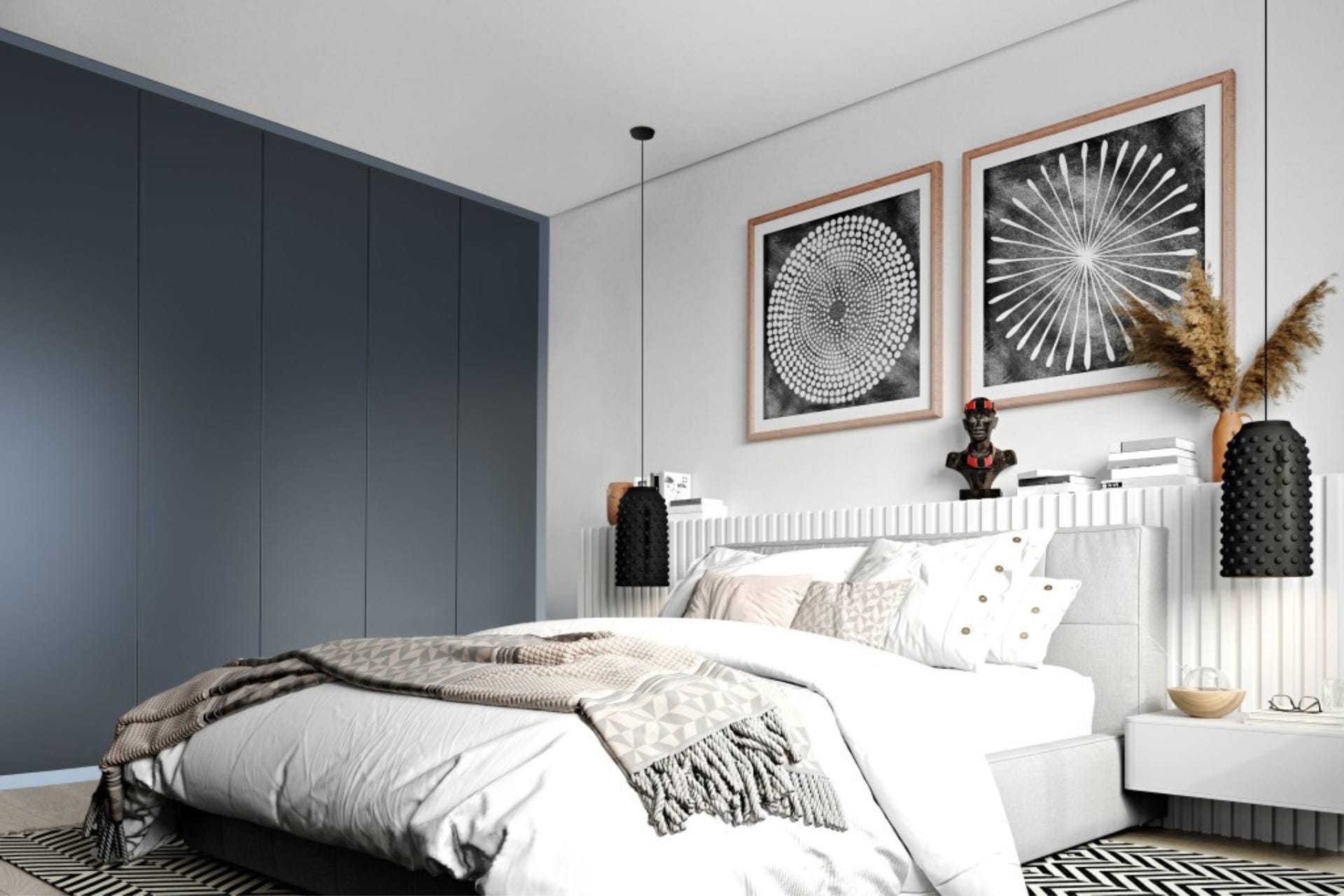
There is a persistent myth that dark colours make rooms feel smaller. While this can be true if handled poorly, it is far from inevitable. A bedroom decorated in a deep, enveloping tone, a rich forest green, a moody navy, a warm charcoal, can feel extraordinarily atmospheric and cocooning, particularly in a room with good proportions.
The secret to using deeper colours well is commitment. Half-measures rarely work. A room where one wall is painted dark and the others are light tends to feel unresolved. A room where the walls, ceiling, and joinery are all in the same deep tone, or in closely related tones, feels intentional, considered, and genuinely beautiful.
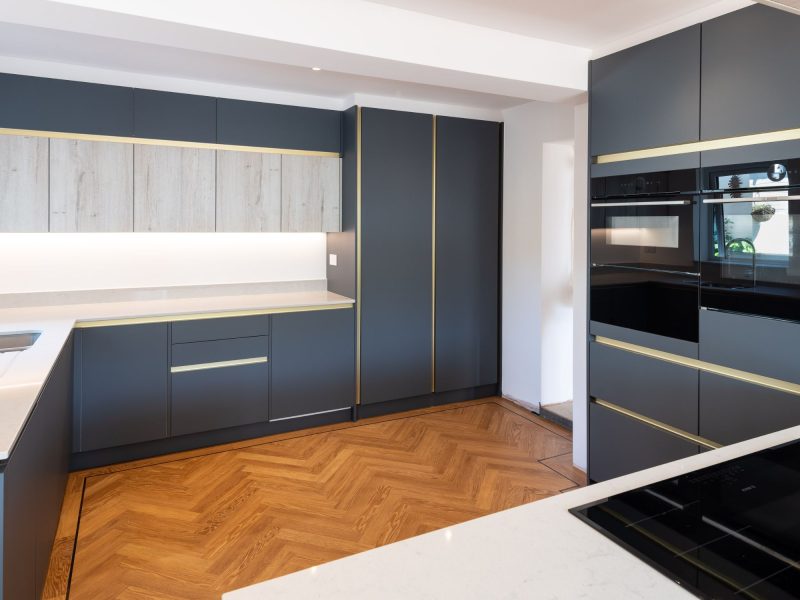
For fitted bedroom cabinetry in a deeper-toned room, you have interesting options. Dark cabinetry in the same tonal family as the walls creates a seamless, immersive effect. Lighter cabinetry in contrast can work too, particularly in a soft white or natural wood that lifts the room without breaking the mood.
Choosing Finishes That Complement Your Palette
The colour of your cabinetry is only one part of the picture. The handles, the worktops, the internal fittings, and the hardware all contribute to the overall palette of the room and need to be chosen with the whole scheme in mind.
In a neutral or cool-toned room, brushed nickel or chrome handles feel natural and cohesive. In a warm-toned room, brushed brass or antique brass adds depth and richness. In a deeper-toned room, matte black can create a striking, contemporary effect.
Our designers will help you work through all of these choices as part of your fitted bedroom consultation at our Seaton showroom. We take colour seriously, and we will always encourage you to see samples and finishes in the context of your own home. You can find out more about our design process on the Your Journey page.
Timeless Versus On-Trend
One of the most useful questions to ask yourself when choosing a bedroom colour scheme is whether you want a palette that will still feel right in ten years, or whether you are happy to redecorate if your taste evolves. For a fitted bedroom, where the cabinetry represents a significant long-term investment, leaning towards the more timeless end of the spectrum is generally wise.
Very on-trend colours, however beautiful they are right now, carry the risk of dating. Colours that feel very specific to a particular moment in design history can start to feel tired within a few years. Classic palettes in neutral, warm, or deep tones, applied with good proportion and quality materials, tend to age much more gracefully.
That said, your bedroom is your space, and personal happiness matters. Our designers will always give you an honest perspective on what they think will stand the test of time, but ultimately the right choice is the one that makes you feel genuinely good every time you walk into the room. Call us on 01297 692250 to start the conversation.
Frequently Asked Questions
What are the most timeless colours for a fitted bedroom?
Soft whites, warm greys, natural stone tones, and muted warm shades like dusty rose or soft sage tend to have the greatest longevity. They are flexible, work with a wide range of furniture finishes, and rarely feel dated in the way that more trend-led colours can.
Can I choose any colour for my fitted bedroom cabinetry?
Yes. Our bespoke fitted bedroom cabinetry can be painted in a very wide range of colours, allowing you to match or complement your chosen scheme precisely. We will bring samples to your home as part of the design process so you can see how colours behave in your actual space.
Should my cabinetry match my walls or contrast with them?
Both approaches can work beautifully. Tonal schemes, where the cabinetry and walls are in closely related colours, feel seamless and considered. Contrast schemes, where the cabinetry stands out against the wall colour, create more visual interest and definition. Our designers will help you explore both options.
Do darker colours make a bedroom feel smaller?
Not necessarily. When used with commitment and good proportion, deeper colours can actually make a room feel more intimate and cocooning rather than smaller. The key is ensuring that the room has enough light and that the furniture and textiles are chosen to complement the depth of the colour.
How do I choose between a painted finish and a wood-effect finish for my bedroom cabinetry?
Painted finishes offer greater flexibility in terms of colour choice and tend to suit both contemporary and traditional interiors. Wood-effect finishes introduce natural warmth and texture and work particularly well in rooms with a more relaxed, organic aesthetic. We can show you both options at our Seaton design studio.