Small Bathrooms, Big Potential
A small bathroom is one of the most common challenges our designers encounter, and it is one they genuinely enjoy solving. The assumption that a compact space is inherently limited is one worth challenging. With the right layout, the right materials, and the right attention to detail, a small bathroom can feel calm, spacious, and beautifully designed.
The good news is that some of the most impressive bathroom transformations we have carried out at PB Kitchens and Bathrooms have been in relatively small rooms. Good design is not about square footage. It is about understanding what the space needs, making every decision with intention, and refusing to accept that a room’s size defines its potential.
In this guide, we share the most effective strategies for making a small bathroom feel significantly larger and more luxurious than its dimensions might suggest.
Start With the Layout
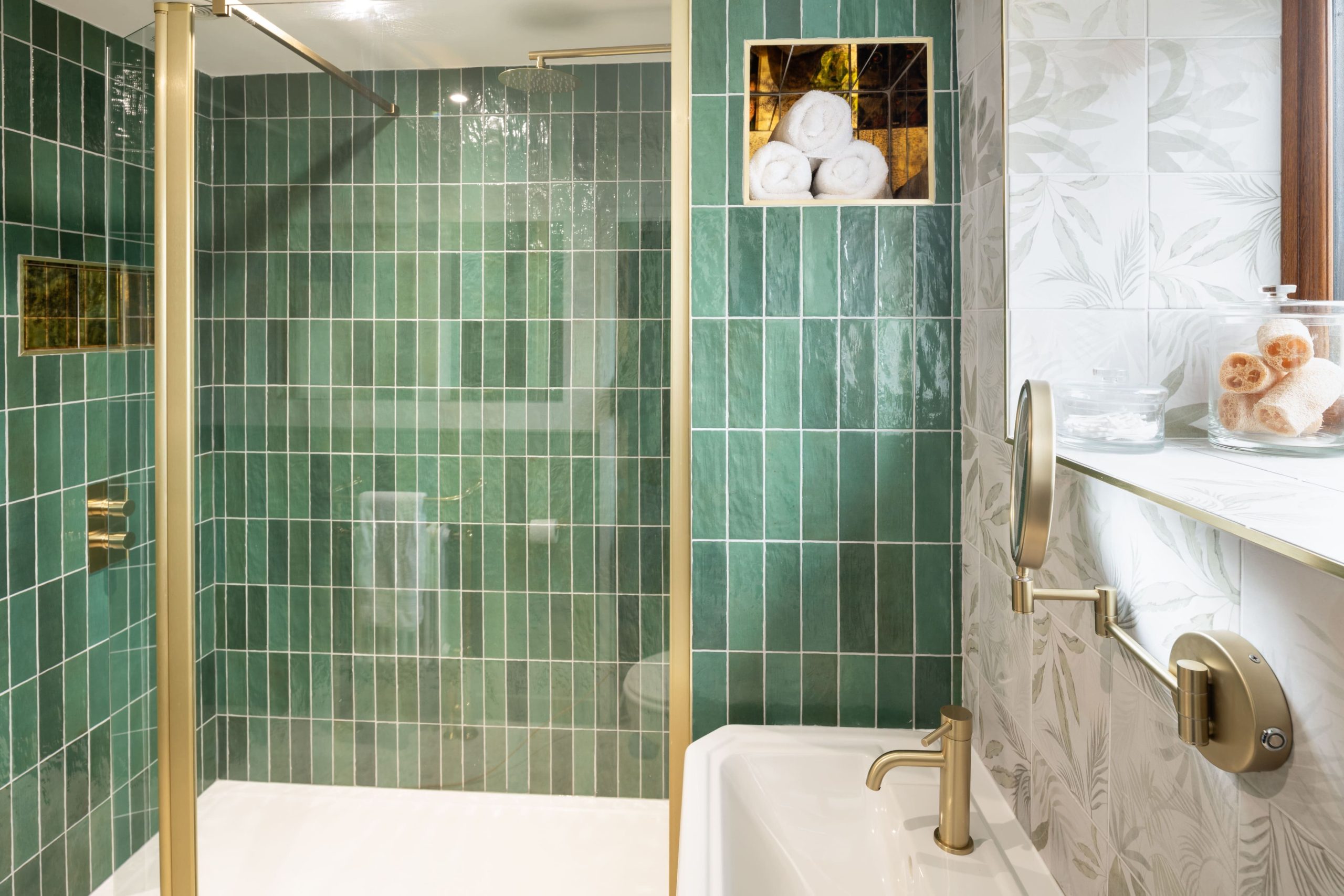
The single most impactful thing you can do in a small bathroom is get the layout right. A poorly planned layout wastes space and creates awkward circulation. A well-planned one makes the room feel logical, uncluttered, and larger than it is.
In a small bathroom, this often means rethinking the position of the sanitaryware rather than simply replacing like with like. Moving a toilet to a different wall, reconfiguring the shower position, or replacing a bath with a walk-in shower and using the freed space for improved circulation can fundamentally transform how a room feels.
Our designers will visit your home and assess the room in detail before making any recommendations. Sometimes a change that seems significant on paper is relatively straightforward in practice, and the improvement to the space is dramatic. You can find out more about how we approach the design and survey process on our Your Journey page.
Choose Large-Format Tiles
Tile choice has a powerful effect on how large a bathroom feels. Large-format tiles, typically 600mm by 600mm or larger, create far fewer grout lines than smaller tiles, which means fewer visual interruptions across the floor and walls. The result is a surface that reads as more continuous and expansive.
Extending the same tile from the floor up the walls, particularly in a shower area, reinforces this effect. When the eye has nothing to stop on, the room feels bigger. Conversely, small mosaic tiles, while beautiful in certain contexts, draw attention to the surfaces themselves and can make a small room feel more enclosed.
Light-toned tiles also help. A pale stone-effect or large-format porcelain in a warm white or soft grey reflects light around the room and avoids the visual weight that darker tiles can create in a confined space. Our designers will always present tile options alongside your full bathroom design so you can see the overall effect before anything is ordered.
Use Mirrors Strategically
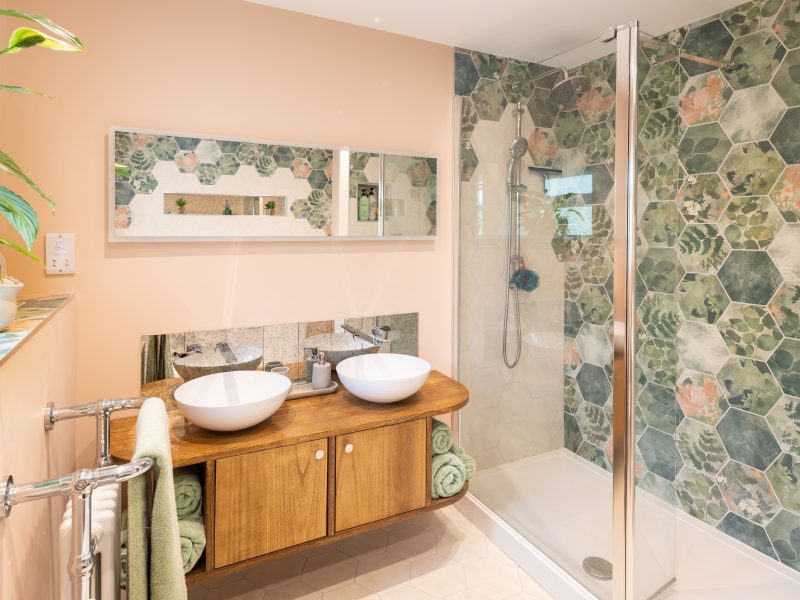
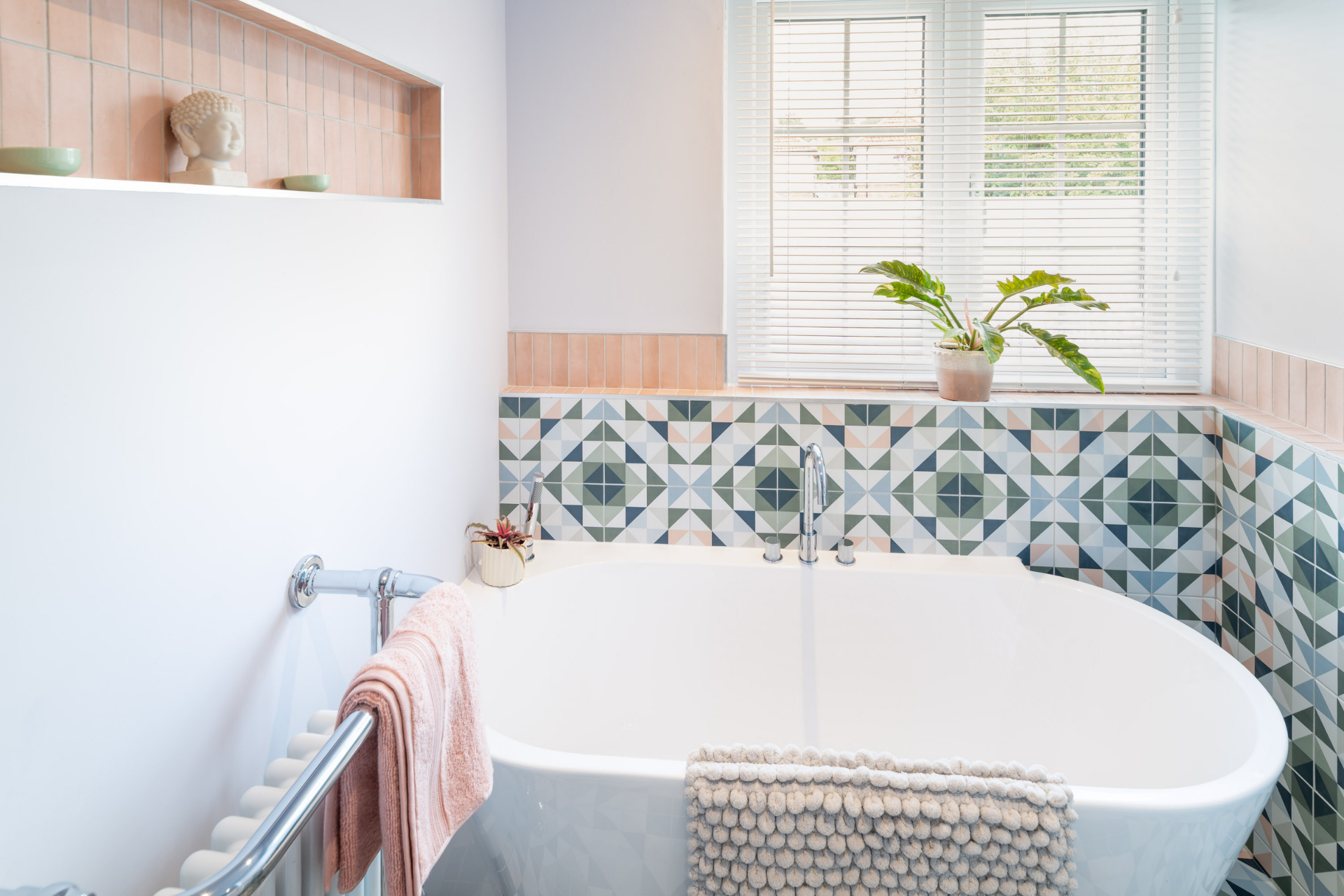
Mirrors are one of the oldest tricks in the interior designer’s toolkit, and they remain one of the most effective. A large mirror, or a run of mirrored cabinetry, doubles the perceived depth of a room and bounces light around in a way that makes a small bathroom feel significantly more open.
In practical terms, a mirrored cabinet above the basin does double duty: it provides useful bathroom storage while also serving as a design element that opens up the space. Running the mirror from the top of the basin to the ceiling, rather than stopping it at a conventional height, extends the effect further.
If your bathroom has a window, positioning a mirror so that it reflects the natural light coming through will amplify the effect considerably. Our bathroom gallery features a number of projects where mirrors have been used cleverly to transform the feel of a compact space.
Maximise Storage Without Cluttering the Space
One of the biggest reasons small bathrooms feel cramped is that they run out of storage and become cluttered with products, towels, and accessories left out on every available surface. Solving the storage problem is essential to making the room feel bigger.
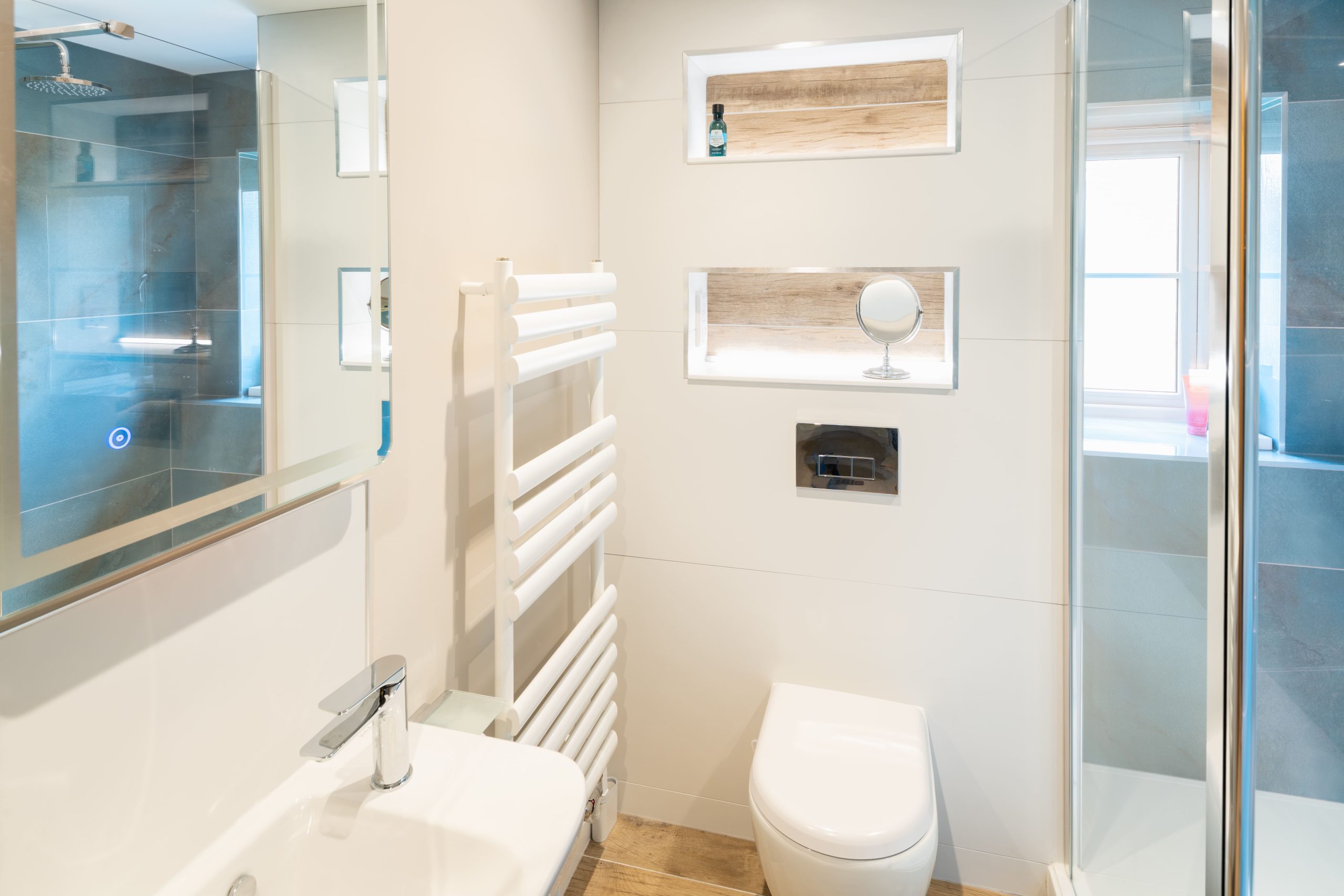
The most effective approach is to build storage into the design rather than adding it afterwards. A vanity unit with integrated drawers beneath the basin keeps products out of sight. Recessed niches in the shower walls provide shelving for bottles without taking up any floor space. A mirror cabinet above the basin gives you additional hidden storage without adding visual bulk.
Wall-hung sanitaryware is another excellent strategy for smaller bathrooms. A wall-hung toilet and a wall-hung basin both appear to float above the floor, which makes the floor visible across more of the room and creates a sense of space that floor-standing units cannot achieve. You can see examples of how we use wall-hung sanitaryware in our bathroom gallery.
Think Carefully About Colour and Light
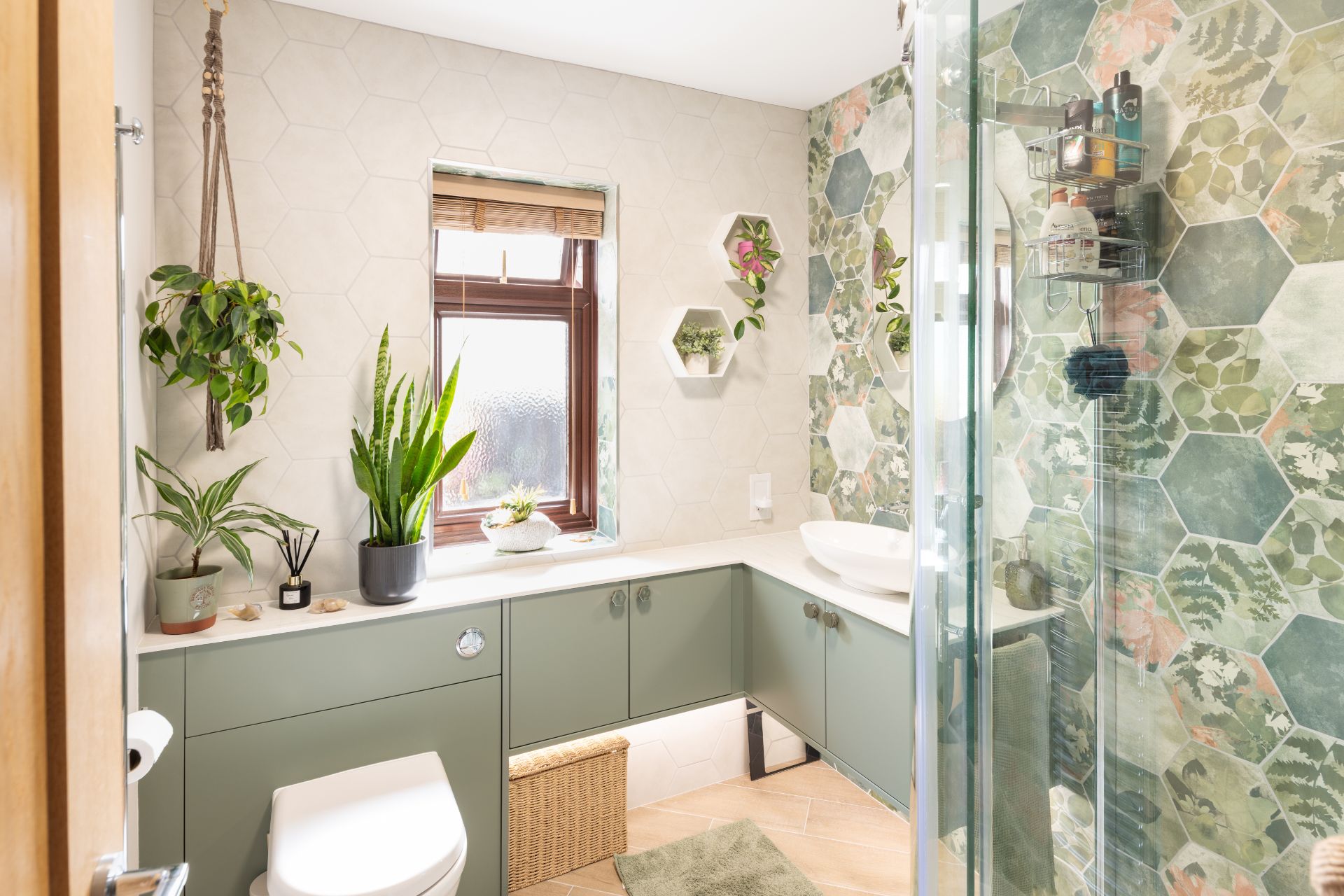
Light and colour work together to shape how a room feels. In a small bathroom, the goal is usually to maximise both. Pale, warm tones on the walls and floor reflect more light than darker ones and create an impression of space. This does not mean the room has to feel clinical or cold. Warm off-whites, soft stone tones, and pale sage greens can all create a sense of space while still feeling genuinely inviting.
Artificial lighting is equally important. A single overhead light, particularly one that casts shadows, will always make a small room feel smaller. Lighting the mirror well, whether with recessed downlights above it or integrated lighting within the cabinet, eliminates the shadows that make faces and the room look flat and enclosed.
If the room has a window, keep the treatment as light and minimal as possible. Heavy curtains or frosted film that blocks light entirely are counterproductive. A privacy-frosted glass panel that lets light through while maintaining privacy is a much better solution for a small bathroom.
Call on the Experts
Designing a small bathroom well requires experience and an eye for detail that comes from having solved similar problems many times before. At PB Kitchens and Bathrooms, our designers bring genuine expertise to compact spaces, and they will always explore every possibility before concluding that something cannot be done.
If you have a small bathroom that is not working as well as it should, we would love to help. Visit our Seaton design studio to talk through your ideas, or call us on 01297 692250 to arrange a consultation. We serve homeowners across Devon and Dorset, from Exeter and Sidmouth to Lyme Regis and beyond. Take a look at our bathrooms page for more information on what we offer.
Frequently Asked Questions
Should I remove the bath to make a small bathroom feel bigger?
It depends on your priorities. Replacing a bath with a walk-in shower can free up significant floor space and make a small bathroom feel much more open. However, if you regularly use a bath or if it is the only one in the property, it may be worth exploring a layout that accommodates both, or a more compact bath option, before removing it entirely.
What colour tiles make a small bathroom look bigger?
Light-toned, large-format tiles in pale stone, warm white, or soft grey are the most effective choice for making a small bathroom feel larger. The large format reduces the number of grout lines and the lighter tone reflects light around the room. Extending the same tile from floor to wall reinforces the effect.
Do wall-hung toilets and basins really make a difference in a small bathroom?
Yes, they do. Because wall-hung sanitaryware appears to float above the floor, the visible floor area increases and the room feels more open. The clean lines of wall-hung units also contribute to a less cluttered, more spacious overall impression.
Is a wet room a good option for a small bathroom?
A wet room, with a level-access shower floor and no enclosure, can work very well in a small bathroom. Without the visual barrier of a shower tray or screen, the room reads as a single, unified space, which makes it feel larger. It also removes a cleaning and maintenance burden. Our team can advise on whether a wet room is suitable for your specific room and drainage situation.
How much does a small bathroom renovation cost?
The cost depends on the scope of the work, the sanitaryware and fixtures specified, and any structural changes required. Our small and medium bathrooms typically start from around £12,000 including full design and installation. We provide a fully transparent, itemised quote after your initial consultation so you know exactly what is included.